 Lothar-Günther Buchheim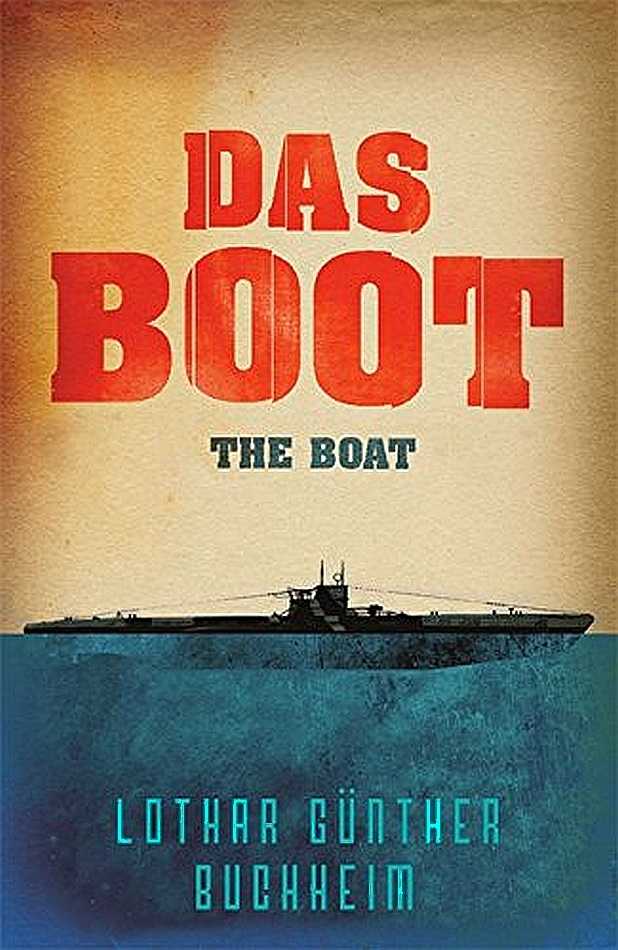
DAS BOOT (THE BOAT)
by Lothar-Günther Buchheim
Translated from the German by Denver and Helen Lindley
Table of Contents
THE CREW OF THE BOAT
I BAR ROYAL
II DEPARTURE
THE CREW OF THE BOAT
OFFICERS:
Commander (the Old Man—also addressed as Herr Kaleun, the standard naval abbreviation of his full title, Herr Kapitänleutnant) First Watch Officer
Second Watch Officer
Chief Engineer (the Chief)
Second Engineer
Narrator—a naval war correspondent
PETTY OFFICERS AND SEAMEN (“LORDS”):
Ario—diesel stoker
Bachmann (“Gigolo”)—diesel stoker
Behrmann (”Number One”)—bosun
the Bible scholar—control-room assistant
Bockstiegel—seaman
Dorian (”the Berliner”)—bosun’s mate
Dufte—seaman
Dunlop—torpedo man
Fackler—diesel stoker
Franz—chief mechanic
Frenssen—diesel mechanic mate
Hacker—torpedo mechanic
Hagen—E-stoker
Herrmann—sound man
Hinrich—radioman
Isenberg (”Tin-ear Willie”)—control-room mate
Johann—chief mechanic
Katter (“Cookie”)—cook
Kleinschmidt—diesel mechanic mate
Kriechbaum—navigator
Little Benjamin-helmsman
Markus—helmsman
Pilgrim—E-mate
Rademacher—E-mate
Sablonski—diesel stoker
Schwalle—seaman
Turbo—control-room assistant
Ullmann—ensign
Wichmann—bosun’s mate
Zeitler—bosun’s mate
Zörner—E-stoker
and fourteen others unnamed. The normal crew for a boat of this class was 50; on this voyage, however, the Second Engineer was a supernumerary, on board for duty training.
This book is a novel but not a work of fiction. The author witnessed all the events reported in it; they are the sum of his experiences aboard U-boats.
Nevertheless, the description of the characters who take part are not portraits of real persons living or dead.
The operations that form the subject of the book took place primarily in the fall and winter of 1941. At that time the turning point was becoming apparent in all the theaters of the war. Before Moscow, the troops of the Wehrmacht—only a few weeks after the battle of encirclement at Kiev—were brought to a standstill for the first time. In North Africa the British troops went on the offensive. The United States was providing supplies for the Soviet Union and itself became—